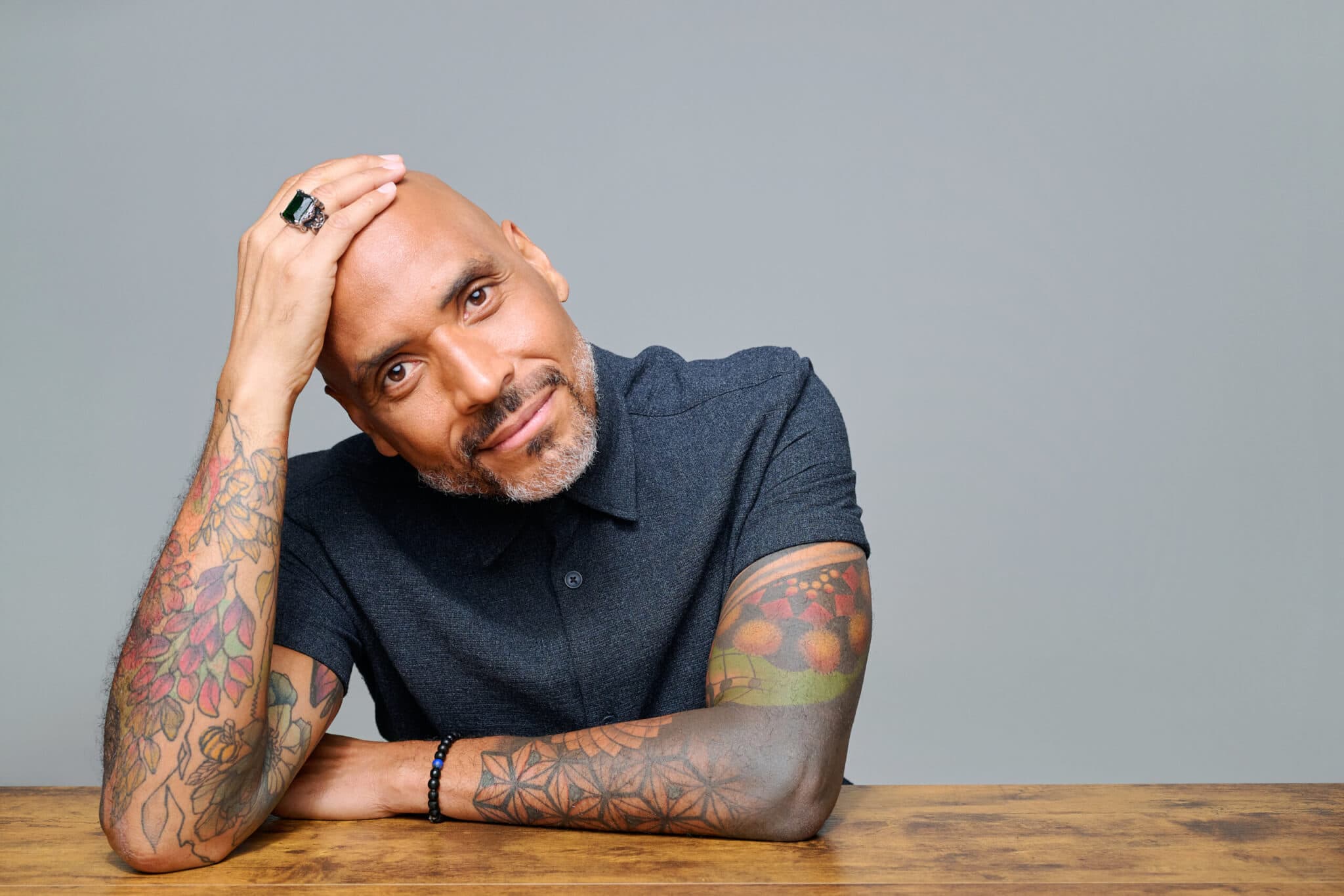
From 2021 through the end of this year, Michael J. Bobbitt helmed Massachusetts’s state government arts agency, Mass Cultural Council (MCC). Though each is named differently, every state has a government agency tasked with supporting and representing the arts in the state government, making them a cornerstone of local arts industries and ecosystems. As executive director of MCC, Bobbitt’s role made him the highest-ranking government representative of the arts in the Commonwealth and responsible for the largest public funder of arts organizations and artists in the state, contributing essential support to MA’s $29.7-billion local creative economy.
Bobbitt quickly established himself as a thought leader unafraid to ask difficult questions about the assumptions and practices that operationalize the arts. He built a national reputation by showing that while systems change can be challenging, of all the headwinds the arts face, a failure of collective imagination to design the future we want and failure to find our voice to articulate it should not be among them.
After serving as artistic director of New Repertory Theatre, he stepped into his role with MCC in 2021, where he oversaw a transformational moment for the arts, leading the Massachusetts arts sector through the pandemic and later post-pandemic recovery.
Under Bobbitt’s leadership, the MCC designed initiatives that explicitly embedded the arts in statewide health, education, and economic policies; the state appropriations for the agency grew from $18.2 million to $26.9 million (the largest appropriation for the arts since the 1980s); and he oversaw pandemic recovery programs, including administering $60.1 million in Covid-relief funds.
It’s no secret that 2025 has been a year of political upheaval and uncertainty as artists and organizations navigate recent Trump administration executive orders that seek to limit funding and censor arts organizations throughout the US and in the Commonwealth. As politically motivated reductions of federal funding are pushing state legislatures into difficult decisions, challenging macroeconomic conditions further cloud the future for the arts.
This environment of uncertainty makes the end of 2025 a particularly hard time to say goodbye to a leader who, in five years, has ardently modeled the ways in which artists are their own best advocates—that in order to make change, cultural workers need to engage with the government, not avoid it. In this farewell conversation, before his transition to president and CEO of Opera America in New York City, Bobbitt emphasized how his time at Mass Cultural Council will be remembered for his insistence that grants and funding for the arts is just the beginning of the work that state arts agencies can and should do.
His love for the arts community was at times tough, but his point has always been to encourage empowerment and advocacy. Central to the legacy of Bobbitt’s leadership is that no one knows what the arts sector needs to thrive better than those working in it. It’s therefore up to the artists, the arts administrators, and cultural stewards to use their collective power to demand the policies, systems, and structures needed for the arts to thrive in Massachusetts.
The following conversation has been edited and condensed.
Kim Córdova: Michael, thank you so much for your time. It’s really nice to connect. I imagine as you are prepping for departure and going into the holidays, you must be processing a lot of big feelings right now.
Michael J. Bobbitt: Oh, lots of big feelings. I keep telling people I have seen and heard the word bittersweet written in art, songs, poetry, but this is the one that sits the most. I now really know what it means.
KC: I can only imagine! To set some context, you took the reins after Anita Walker led Mass Cultural Council for thirteen years, stepping in as executive director in 2021 at a really transformational time for arts organizations and frankly, the world. When I say that, I’m specifically thinking of Covid. How did the pandemic and pandemic-era recovery initiatives inform your leadership at the Council, and did they serve as a catalytic force for rethinking how MCC supports the state’s arts ecosystem?
MJB: That’s a question that I could talk about and unpack for probably our whole time. You know, I was running an arts organization at the time that I was interviewing for the job with the Cultural Council. It was devastating to have to fire so many people and cancel shows and not know when things were coming back. One of the things that I was exploring was: had I stayed [at New Repertory Theatre], what was the opportunity that crisis might have offered us? How do we make ourselves not vulnerable to this again?
At the time, a lot of us were looking at virtual programming. But I was more interested in business models. What is it that we’re doing as a theater that maybe we can take a moment to redesign or relook at. And so when I was interviewing with the Cultural Council that was on my brain. How can a state agency support a whole sector in re-envisioning how the arts should function? How can it be integrated and supported to become more stable?
I knew that working in government and grantmaking gave me the possibility to focus on systems change, to get the sector to think beyond what’s happening next week or next month or next year, to think more about how the arts sector offers support to everything from transportation to housing to health and education. In that way, coming into the agency during Covid was a chance to think big picture about what the arts sector can do and also think about what the model of a state arts agency should be.
When you look at other state agencies, they are trying to eradicate the problem that they are asked to sort of oversee, and then do a little bit of grantmaking on the side. Those were the models that I had in mind. If I compare it to housing, the housing agencies are not just trying to get unhoused people housed; mostly, they’re trying to fix the unhousing issue. And every state agency is sort of put in place for that. So that’s kind of what I was hoping to do—to use Covid to really think about the big picture of the creative sector and what our value is to the state and the world.
KC: Using the housing sector as a metaphor: If the housing agency responds to the structural issues that lead to people being unhoused, what is the comparable “problem” within the arts that MCC, as a government agency, is then responding to?
MJB: I mean, there isn’t a lot of cultural policy on the books locally, statewide, nationally. Often the creative sector thinks about government as a funder as opposed to all the other ways that government impacts the sector. This includes regulatory action, programmatic action, and the integration of the work that’s being done across state agencies. And so that’s where the opportunity is.
The funding is the funding and it’s limited. There is possibly an endless bucket of opportunities that lies in the kinds of legislative work and interventions that the government can do for the creative sector. And so that’s the part that I was hoping to explore and we started doing it a little bit. I think we laid the foundation during my tenure there, and I hope that that continues because that’s where so much can happen.
KC: That leads me into my next question. It’s been fascinating to see how you’ve really established yourself as a thought leader advocating for a lot of systems change. I’ve been reading your essays about structures of arts organization operation and oversight within the arts that people tend to accept without realizing they can be changed. This includes everything from how boards operate to—what you just touched upon—the government acting as a funding source, and the need to reframe culture as an infrastructure for policymakers. Thinking about the Cultural Council’s next chapter and what it may hold, do you have any concrete examples of what some of those other government interventions might be that could support the sector?
MJB: We can spend a lot of time admiring the problems, but we don’t necessarily always get to solutions.
But if I’m to speak concretely, for example, the legislature passed a law allowing Mass Cultural Council to create Cultural Districts. Those Cultural Districts don’t come with any benefits. There was no money attached, no tax incentives or credits or tax laws attached—the kinds of things you see in Business Improvement Districts or historic districts. But those creative districts are hubs where there are jobs and where density is desired. So how do we put even more into those districts?
Maybe there are housing tax credits to incentivize developers to build so those districts can be used to put housing in them. Another example could be the desire to reduce emissions—to do that we need to incentivize getting people out of cars, right?
It makes me think about what we can do with transportation to make the riding experience nicer so that people decide to use public transportation rather than cars. And that could generate jobs for artists in the form of public art and wayfinding signage. There are intersections across the state that don’t meet the threshold for a stop sign or a traffic light. But traffic-calming art is a great way to beautify those intersections and it’s been proven by science to slow traffic down.
I think about STEM in STEAM and how STEAM is additive. STEAM allows people who are in STEM to become even more creative. But that’s not a philosophy. That’s a workforce development program. That’s a program that needs to be invested in, with infrastructure built and programs designed to make sure that every child in this state has significant experience in creativity so that they can become the most creative engineers and the most creative legislators and the most creative teachers. I can go on and on about all the kinds of legislative actions that can be taken that will build stability and integrate arts and culture.
KC: Mass Cultural Council’s budget grew pretty significantly from $16.3 million to $34 million during your tenure. And as part of this question, I want to flag that it looks like that’s the first time since the late 80s that the Cultural Council has had a budget of that dollar amount. But when compared to the state’s overall budget of $57.8 billion, that number seems miniscule. And it’s actually still short of that 1988 budget of $27 million when you adjust it for inflation, which would be about $74 million in today’s dollars. So I’m wondering if you might walk me through what the budget given to Mass Cultural Council tells us about how the arts and creative economy rank in terms of the legislature’s priorities?
MJB: The legislature has been very generous and I’m glad that I’ve had an effect on increasing the pot of money that goes to the sector.
I think my first year the budget was $18.2 million. This year it’s about $27 million. But that’s really the legislative money, not the other things that we count, like bond authorizations or casino tax dollars. If you’re comparing apples to apples, then based on the GDP, if the arts is a $29.7-billion industry, does the amount of money we get necessarily equate?
We’ve had great partners, especially at MASSCreative and then certainly the staff at Mass Culture Council has been instrumental in getting us into the rooms with legislators to make the appeal. I’d love to see [the budget] continue to grow. I’d love to see Massachusetts increase the investment because I think that investment will easily come back.
Places around the world that have struggled with visitorship or money turn to the arts, and the arts tend to bring people in that spend money. You can look at the 1970s I Love New York campaign—that saved New York and centered arts and culture. You can look at how New Orleans came back because of arts and culture after Katrina. So it’s a big asset that I think is undervalued for how much it can do to support economic growth.
I’m, again, happy that the legislature trusted me and kept increasing our dollars every year. The other thing I will say is that money’s great and it’s deeply impactful for the people who receive it. But based on our data, 96 percent of the arts sector doesn’t receive anything from Mass Cultural Council. So even with an increase in allocation, our funding is still not serving the bulk of the sector. So that’s where I think, again, the legislative intervention is really where the bulk of the work can and should happen.
KC: It sounds like you’re gesturing toward thinking about how Mass Cultural Council can help the legislature design and implement policies that support a thriving cultural sector. I’m thinking of zoning, sound ordinances, permitting, etc.
MJB: Yeah, I mean, it’s three different areas—financial support, programmatic support, and regulatory action—to make the conditions so that the sector can thrive.
Within those three things, I think the three basic buckets are workforce development, economic development, and creative placemaking. And if you start thinking about that matrix, then there’s hundreds of things that can be done. I dreamed of an arts omnibus bill. That was one of the things I wanted to do: help pass the first statewide arts omnibus in the nation.
KC: What would that have looked like?
MJB: I certainly think we would have had to find some big idea to anchor it on. In my mind, one of the biggest things for the state would be STEM to STEAM. But I also thought: What if Western Mass was identified as the Hollywood of the East? And what does that look like? And how could that support housing and transportation to go more out east?
We could have put all these other things in that omnibus bill. That was a big dream of mine. And I’m sad that I didn’t get it to happen, but maybe I can convince other people.
KC: Another question I have is about the arts as a source of power within the State House. I’ve heard that within the legislature, there’s sort of this idea that the Joint Committee on Tourism, Arts and Cultural Development could be seen as a committee appointment for rookie members to prove themselves before they move up to get assigned to committees that are perceived to have more political power. It reminded me of a conversation that we had about the importance of arts not being relegated to the policymakers’ kids’ table. Do you have a vision for how arts workers might organize to make policymakers see arts as a source of political agency and not just discretionary spending?
MJB: I hadn’t heard the idea of it being a junior appointment, but this could go back to how we are trained to be artists. In many places, business acumen and political engagement are not part of the curriculum.
When you think about the sectors that do the best in the state, in the country, they have deep relationships with government. I think when government invests in certain sectors, the private sector follows. The same thing happens conversely. When government divests, the private sector follows. So that relationship to government is huge. And if we’re not preparing our artists who are going to the workforce to know that government engagement is vitally important, then it’s harder to get them engaged once they’re out in the world and are struggling to make ends meet. Maybe they’re frustrated because they didn’t get those business and political engagement skills, so they don’t see the value in it.
So I think about the sectors that are much more organized—for example, the gun lobby, environmentalists, housing, truckers, fuel, manufacturing, agriculture. What would happen to the art sector if we were as organized and active with our government advocacy as those sectors?
I think great things could happen, but, again, it’s incumbent to the sector to behave differently. I think Covid was our chance to sort of think about our business models. We didn’t really do that. We sort of went back to what we did before Covid.
And now, as we are being targeted by our federal government, it’s time to do something differently from an advocacy perspective. For example, I don’t think anyone should be elected to public office without having an arts platform, but that’s on the sector to demand of candidates and the elected. It’s exciting to imagine it, but it really is going to require the sector to do it. No one else out there will do it on the sector’s behalf. It is the sector’s job to do that work.
This notion of being a starving artist and a scrappy nonprofit is a notion and it’s a belief and it’s a practice. If we want that to change, we have to have different notions and different beliefs and different practices. And that means not admiring the problem but working toward solutions. And most of those solutions are changing behavior and learning stuff that you don’t know.
KC: It sounds like there’s a lot of narrative shifting that has to happen in order for systems change to really occur.
MJB: That’s a term that people use a lot and and I believe that policy and infrastructure do stem from narrative shift.
But what I worry about with our arts sector is that we will put out new narratives and then we won’t follow up with actions. We won’t institutionalize it and operationalize it. We’ve been talking about art and economic impact, but what are the big action steps that we take to make sure our people have access to the arts and education? What are the legislative actions that we’re recommending to make sure this stuff becomes standardized?
Narrative shift is key because that’s where ideas create things, but you’ve got to work. And sometimes we avoid the work because it’s hard, we don’t have time, or we’re struggling with money and we don’t have the skills, and it’s scary to try something different, or our boards don’t think we should be involved in advocacy.
But all that stuff is creating the conditions by which we’re living now, and it’s not working for most of us. And I want it to work. I want people to have the life they want to have by doing the work that they’re doing.
KC: With that in mind, has the Cultural Council been doing much work around AI and creative labor and creative production?
MJB: Not yet. And mostly because we’re still sort of getting our sea legs when it comes to this advancement work, this building relationships across state government. And personally, I don’t love the idea that AI is stealing art from artists.
I know that we’re not going to get any regulation on AI anytime soon. I also know that when we have technological advances, oddly enough, the arts sector is the last jump on board because they see technology as a threat. When we went to radio, the theater world was like, no. When the talkies came out, the film industry was like, no. When streaming came out, the record industry also said no. So we’re always five, ten years behind the rest of the world and we are the innovators—we should be taking these technologies and taking them to the next place. And so I’ve been telling people that I don’t want AI to make you lose your job, but I also don’t want you to lose out on a job because someone else knows AI and you don’t. To me, it may be an opportunity if we can embrace it and figure it out, but it’s not going anywhere.
KC: What about things that you wish you had done—things that you either didn’t get to or wish you had done differently or were there any missed opportunities over your tenure?
MJB: I think certainly the arts omnibus bill was a big wishlist thing. I had a dream of seeing if I could create a program whereby all the new legislators going into office would drive around to a couple of communities and just have an immersive arts day.
I’ve been through a lot of leadership programs in the state and I wanted to design an arts day for all of them so that anyone in C-suites or middle management, no matter what industry you were coming from, you had an arts day. We have transportation days, we have public safety days, and I just always thought we needed an arts day. So I wanted that to happen.
I wanted more legislation passed, but I think all of that is to come. So I have no regrets.
KC: What do you feel like this role taught you? What did Massachusetts teach you? And are there any particularly memorable moments from your time here?
MJB: Oh gosh. So many. First, being in a state that is first at so many things taught me that so much is possible. It also taught me that vision is critical. When you see people that have a vision, all of a sudden things happen.
So much professional development has happened in my life in the last six-and-a-half years that I’ve been here. So I am grateful for all of that from Harvard Business School, Harvard Kennedy School, The Partnership, the CAP Collaborative program, University of Massachusetts. I have absorbed so much information and I’ve been in so many rooms.
One of my favorites moments—this is so small—but I went to the Chesterwood Museum, and I read a little bit about Daniel Chester French, the sculptor. I didn’t really know the breadth of his work, and so I walked in and I was facing in one direction and the chief curator came in and told me to turn around and look. And I turned around and there’s the hand-sculpted version of the Lincoln Memorial right behind me. And I was like, Oh my God, that happened right here in Massachusetts. So that was a memorable moment.
And I started uncovering all these things that happened in Massachusetts. It is a state literally built on arts and culture. I’m so happy to have been a part of naming the state’s first poet laureate. The work we did redesigning our grants to make them much more user friendly. The work we did to build relationships with multicultural communities.
My favorite things were always going to visit arts organizations. I loved driving all over the state and looking into the eyes of these people that were making the world better and letting them know that they were loved and seen and noticed and needed.
Annually reading the “’Twas the Night Before Christmas” at the Boston Symphony Orchestra. Reading the Longfellow poem about Paul Revere at the Old North Church, having been introduced by our former governor was a moment. Meeting the cast of Into the Woods on tour at Emerson Theatre with Governor Healey and having her hug my friends. Hanging out with the lieutenant governor and my friend Stephen Schwartz, who wrote Wicked, when he was premiering his show. There are hundreds of moments that stick out in my head. And sometimes I pinch myself. What a terrific five years.