Editor’s Note (July 30, 2026, 11:00 a.m.): Information related to Amendment 29, including a quotation from MASSCreative Executive Director Emily Ruddock, has been amended to more accurately reflect details and timeline information.
The first step in solving a problem is admitting that you have one. According to Massachusetts State Senator Julian Cyr, who represents Cape Cod, Martha’s Vineyard, and Nantucket, a major problem facing Boston and Massachusetts is that we’re boring.
“What I hear from my friends who are visiting from other states … time and again [is] how boring they find Boston to be [and] how boring they think Massachusetts is,” he said in a phone interview.
Together with State Senators Dylan Fernandes, Robyn Kennedy, Pavel Payano, Jo Comerford, and Adam Gómez, Cyr filed a suite of amendments to the economic development bill. The proposed amendments are part of what his office called the “fun agenda” in a July 21 press release. Together with amendments filed by State Senators Paul Mark and Liz Miranda, the fun agenda brings forward several pieces of cultural policy for consideration during this legislative cycle.
All of these amendments are senators’ proposed additions to S.3178, the Senate’s cumbersomely named and wide-ranging economic development package. It includes some, but not all, of the proposals from Governor Maura Healey’s $305 million Mass Wins Act, which was also designed to target economic development. S.3178 encompasses a diverse range of policy, including developing AI safety guardrails, increasing the construction of affordable housing, regulating e-bikes and scooters, and supporting the local arts sector. The bill would authorize $325.1 million, but this total may change as amendments are made this week.
Cyr’s good times policy is about more than rubber-stamping hedonism through the law. The fun coalition is trying to put policy to work to address the state’s commitment to stodginess. In light of Boston’s loneliness epidemic, the idea is that Massachusetts’s boring problem is a quality-of-living crisis. This, combined with the cost-of-living crisis, is a governance issue that warrants policy intervention because it impedes the state’s growth by making it harder to retain young people.
“It’s clear that we need to do more to keep young people in Massachusetts. So much of that comes down to the cost of living, but there’s a fun factor, too. I hear all the time from people of every generation—but especially younger residents—that they’re looking for more opportunities to gather, connect, and share experiences. By strengthening our nightlife, arts, and outdoor recreation, we can shed our well-earned reputation for being a little boring while making Massachusetts a more desirable place to live, work, and visit,” Cyr wrote in an emailed statement.
The “fun agenda” includes several pieces of legislation that would support the state’s pivot to prioritize play. Cyr noted on a call that the coalition wants to formalize an Office of Outdoor Recreation in state law to expand support for agritourism and improve hiking trails in the Commonwealth; repeal the state’s 1984 happy hour ban; and fund a micro-grants program for artists, overseen by the Massachusetts Cultural Council.
“The amendment builds on a highly successful micro-grant program for artists and creatives executed by the Massachusetts Cultural Council during the COVID-19 pandemic. And … the amendment would provide a million dollars in funding to MCC over five years … to provide direct support to local creatives and to help strengthen cultural experiences,” Cyr said on a call.
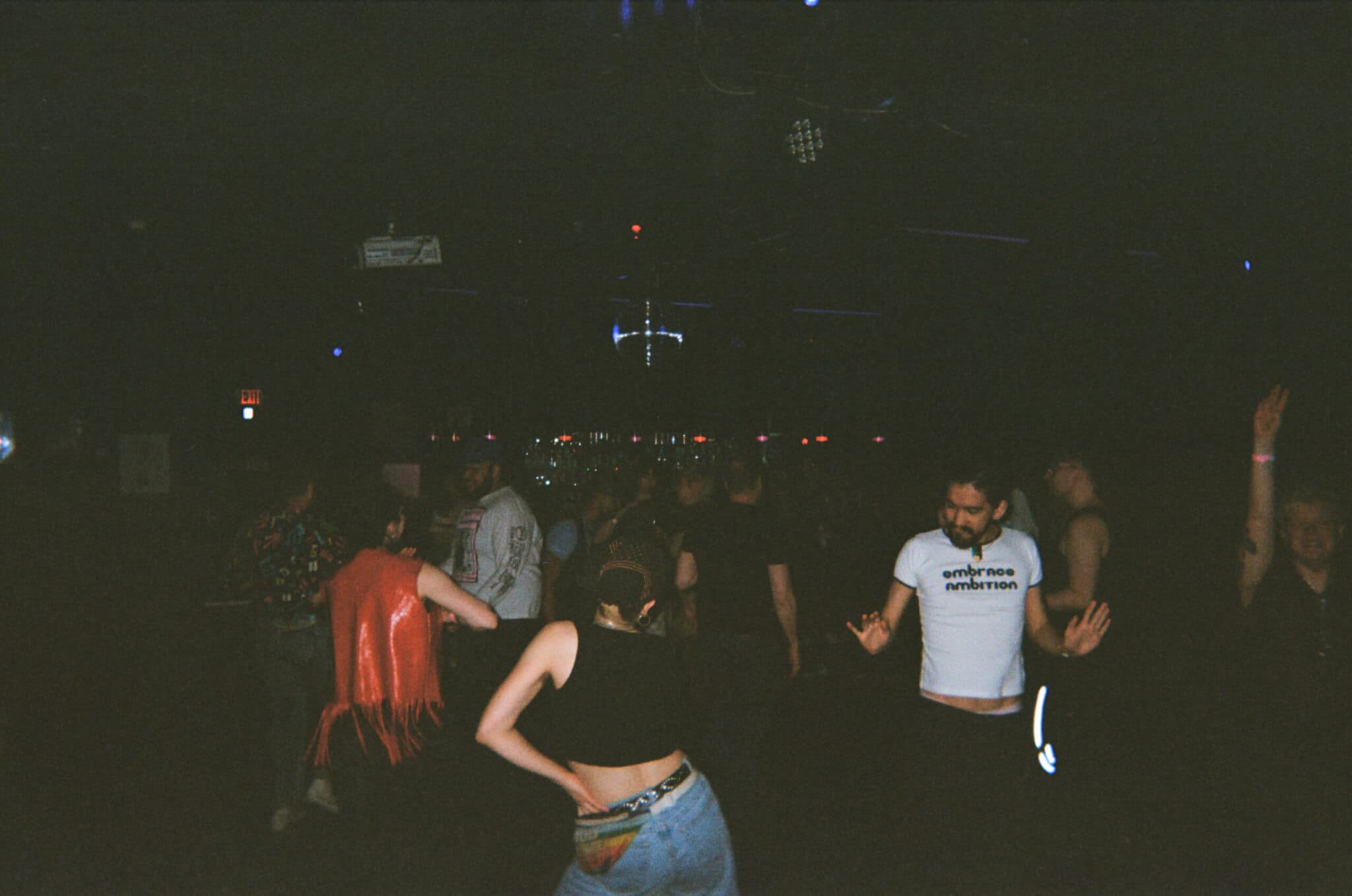
The whole project came out of Boston’s World Cup party bump. According to the Boston Globe, the idea for this amendment package dawned on a group of state senators during a post-game dance party. After the state’s World Cup beer sales, hotel reservations, and even Tinder usage had been tallied, Beacon Hill seems to have realized that the shift to fun Boston is good for cultural vibrancy—which is good for business and good for the state.
Even Governor Healey is in on the fun docket action. On July 16, she announced The Great Divide Act, a nod to musician Noah Kahan. The act—filed by Fernandes as Amendment 20, To make music affordable by reining in predatory ticket scalping—would cap resale ticket costs at 110 percent of face value and limit ticket reseller service fees and charges. Healey also supports repealing the 1984 happy hour ban, which was filed by Cyr and included in the “fun agenda” as Amendment 78, Conviviality.
While the rhetoric around the package is appealing, the reality is that the amount of money it offers is minimal. The five-year, $1 million micro-grant program for artists pencils out to $200,000 a year, or approximately 0.0003 percent of the $63.4 billion fiscal year 2027 budget.
The fun agenda isn’t the only legislation meant to support artists under consideration during this year’s legislative calendar.
Speaking by phone midday July 20, MASSCreative Executive Director Emily Ruddock said, “The Senate Ways and Means released their version [of the bond bill] last week. It does not include the Creative Space Act language. It does, however, include the other amendments that we were working on [on] the House side, which would expand cultural facilities fund eligibility. It retains the downtown vitality fund grant program and then within that grant program for creative economy adds Mass Cultural Council as a collaborator … the deadline to file amendments is today at 5:00 p.m.”
On Monday afternoon, Miranda filed Amendment 29—which includes language from the Creative Space Act—and preserving the creative economy.
“We’ve watched communities erased not only through rising rents, but through the loss of the artists, businesses, and cultural spaces that define them. We’ve seen the promise of projects like Humphreys Street Studios, but we’ve also felt the loss of Black Market Nubian. The Creative Space Act won’t solve every challenge, but it will help stop the bleed and ensure that preserving culture is treated as a core part of building stronger communities,” Miranda wrote in an emailed statement.
Additional amendments that support the arts include Mark’s Amendment 109, Tourism and visitation Economic growth, new revenue and jobs. This would establish that 2.5 percent of the state’s room occupancy excise from the prior fiscal year would be credited to the Massachusetts Tourism Trust Fund. Finally, Cyr’s Amendment 367—Seasonal Communities Housing Fund—would create a state fund to support housing in municipalities designated as seasonal communities, such as Cape Cod. The fund includes a provision that supports year-round artist housing in cities that accept the designation.
This week, the Massachusetts State Senate will debate 595 proposed amendments to S.3178 to determine which will be officially added to the bill before it is brought to the floor for a vote. It’s unclear when a vote will be held. Although December 31 is technically the deadline, there is traditionally a push to vote on major pieces of legislation ahead of the summer recess.
Debate over S.3178 amendments will continue through Thursday, July 23. In a July 21 e-blast, arts advocacy group MASSCreative encouraged constituents to call their senators and voice support for these amendments.
Local Headlines
Nightlife Czar’s Work Comes into Focus
Boston’s nightlife czar, Corean Reynolds, was quoted in The Economist about her work supporting the City’s nocturnal businesses. This includes pushing the City to add 225 new liquor licenses, a departure from its artificially low cap set in the 1930s, just after Prohibition, and at a time when the State House was particularly wary of the predominantly Irish city council. The intricacies of liquor license regulation in Boston have a particularly interesting history: It’s a story of power over conviviality, and of who determines who should have access. Even today, Boston does not have the power to create its own liquor licenses. Instead, city officials must seek state approval. Given that the Massachusetts legislature was ranked the least effective in the US, securing 225 additional licenses is a big deal. Artificially capping the number of licenses and controlling which businesses receive them has been used for decades as an implicit redlining tactic aimed at limiting the places where certain marginalized communities can gather.
National APA Museum Commission Concludes National Listening Tour in Boston
The Commission to Study the Potential Creation of a National Museum of Asian Pacific American History and Culture made Boston its final stop on a nationwide community listening tour. The commission is developing plans to establish a new museum celebrating the achievements and contributions of Asian Pacific Americans. The plans for the new museum, including where it will be located, have yet to be announced.
Barr, Wagner, and Andy Warhol Foundations Invest in Collective Futures Fund
The Barr Foundation is supporting the Collective Futures Fund with $200,000 over two funding cycles, and the Wagner Foundation is contributing $30,000 during the 2026–2027 year. The initiative is a regranting program supported by the Andy Warhol Foundation and an anonymous donor who funds micro-grants of $3,000–$8,000 for local artists. Established in 2022 and administered through Tufts University, the program has awarded $470,000 in grants.
Cambridge City Hall Performance
The MIT Museum hosted an immersive theatrical reenactment honoring the fiftieth anniversary of a little-known Cambridge City Council meeting that has had major historical impact beyond the local community. In 1976, the City Council reviewed Harvard’s request to build a new lab for recombinant DNA research. For The Observer, Michael John Gorman, director of the MIT Museum, delves into the history of the DNA debate and discusses its parallels with current debates over how to evaluate and regulate scientific research.
Are the High Times About to Be Over in MA?
Will Massachusetts become the first state to recriminalize cannabis sales? The Coalition for a Healthy Massachusetts, a group spearheaded by SAM Action Inc., led the Act to Restore Sensible Marijuana Policy, a ballot measure that will put the question before voters this November. SAM Action Inc. is a 501(c)(4), often called a “dark money organization” because it doesn’t disclose its donors. If the measure passes, it would end Massachusetts’s $1.65 billion annual cannabis industry at a moment when the state is already struggling for business.
Judge Orders Pause on Paramount’s Acquisition of Warner Bros. Discovery
A judge has ruled in favor of the California-led twelve-state coalition (which includes Massachusetts) requesting a two-week pause on Paramount’s $81 billion acquisition of Warner Bros. Discovery. The pause is intended to give the states time to pursue their case to block the deal. The coalition of attorneys general asserts that the merger should be blocked because it would limit competition in the culture and entertainment industry and reduce consumer choices.
National & International Headlines
The Heritage Foundation Comes for the Smithsonian
On Tuesday, a Congressional hearing eerily reminiscent of the infamous McCarthy hearings put the screws to the Smithsonian and grilled Anthea Hartig, director of the Smithsonian’s Museum of American History. The museum is just one of several Smithsonian museums to be singled out in the administration’s scathing July 4 report on the Smithsonian Institution. Called as a witness, Mike Gonzalez, a senior fellow at the Heritage Foundation and the author of a May 21 article titled “How the Smithsonian Lost Its Way,” replied to a line of questioning by Congressman Brian Jack of Georgia with “You do need to clean out house at the Smithsonian. You have to replace the leadership,” and “You need to work with the Board of Regents to effect this change.” Gonzalez’s comments shed light on Robin Pogrebin’s recent New York Times piece about how JD Vance has been holding up appointments to the museum’s Board of Regents. The blockade amounts to an attempt to undermine the museum’s leadership and oversight, while the administration also looks for ways to starve the museum of funding. Three seats on the board are currently vacant, and three more are expected to open as current terms expire. Smithsonian Director Lonnie G. Bunch III currently has a “bare majority” of supporters on the board. It appears Vance is hoping to install Trump loyalists in the vacant board seats in an attempt to control the Smithsonian Institution. While the Smithsonian is not technically a government entity, due to its public-private partnership structure, board candidates must be approved by Congress. This means that maintaining the museum’s independence rests, in large part, on the midterm elections. The Heritage Foundation’s work, including its signature Project 2025, has been deeply influential on the Trump administration’s policy. Gonzalez’s influence on cultural policy is real. He has been writing about purging the Smithsonian of “identity politics” since 2020, and he urged the administration to “defund woke public broadcasting” in 2024. His May 21 article asserts “Though drawing less attention than tariffs, ICE operations, and the takeover of Venezuela, the Trump administration’s approach to the Smithsonian has been one of its flagship policies.” The fiery article positions Gonzalez and the Heritage Foundation as among the ideologues behind the administration’s attacks on the museum and its leadership. It also spells out a chilling agenda and vision for the Smithsonian Institution: “All the Smithsonian institutions have succumbed to the woke virus under Bunch.”
Manhattan Borough Commits to Spend $85M on Art in NYC
Oh, to be an arts organization in New York City. In addition to Mayor Zohran Mamdani’s approval of a record $323 million-plus for the Department of Cultural Affairs, the Manhattan borough president’s office announced plans to spend the borough’s $50 million discretionary budget on arts and education. Fifty-five cultural institutions and twenty-eight schools will receive funding. In addition to the $50 million, Manhattan Borough President Brad Holyman-Sigal announced on LinkedIn that his Manhattan Multiplier initiative has raised an additional $35 million for arts and culture in Manhattan, bringing the total to $85 million.
Nebraska Governor Comes for the State’s Cultural Endowment
Citing the need for “belt-tightening,” Nebraska Governor Jim Pillen has called for reallocating $15 million—half of the Nebraska Cultural Endowment’s fund—to a general fund. The Nebraska Cultural Endowment is a public-private fund made up of philanthropic dollars that are matched by the state. Founded in 1998 in response to attacks on the National Education Association, the fund was seeded by late-night talk show host Johnny Carson, who was raised in Nebraska. Today, it is still supported by his namesake foundation, the Johnny Carson Foundation. Nebraska State Senator and Appropriations Committee Vice Chair Christy Armendariz told NPR that cultural organizations “ought to rely more on philanthropy.”
EU Withdraws Funding from the Venice Biennale Over Russia
On Tuesday, the European Union followed through on its threats to withdraw its €2.3 million grant support to the Venice Biennale over Russia’s participation.
Venice Protestors Rally Against US Ambassador and His Super Yacht
Around 300 protesters clashed with riot police in Venice as they gathered to voice disapproval of US Ambassador Tilman Fertitta and his privately funded “Freedom 250 Coastal Diplomacy Italy” tour on his 384-foot, seven-deck, $450 million super yacht, Boardwalk. The protesters carried signs that said “Make America Go Away,” “No space for Billionaires,” and “Venice must not be used.” Fertitta, a Texas billionaire, the owner of the Houston Rockets, and a donor to President Trump’s Save America PAC, has little experience in politics.
Events & Calls to Action
Catch Us at Boston’s Civic Summit on August 1
Boston’s annual Civic Summit returns to Boston University for a daylong series of programs themed We the People. Participants are invited to “explore the evolving meaning of democracy, civic participation, and belonging.” Mayor Michelle Wu will host a fireside chat moderated by NBC10 Boston anchor Kwani Lunis, while other panels will cover public assembly and civic action, housing, and more. Boston Art Review will be collecting community responses to ten inquiries developed as part of our partnership with the City of Boston’s Un-monument initiative. Registration is free, but space is limited.