“MotherFuturism,” curated by Lilly Manycolors, asks: What might it look like to center care in our fight for the future? The show runs through the end of the month at AUNTY’S HOUSE, an aptly named arts kinship organization in Providence that boasts exhibition and studio space and centers artist-parents and their children. “MotherFuturism” continually turns over the idea of mothering. It takes “Mother” as a relational mode, rather than a gendered individual, leading us miles from literal parenting to interspecies kinship and ancestral ties and back to our interpersonal baggage, all while inviting us to consider what ethics we need to build a more caring future for our planet.
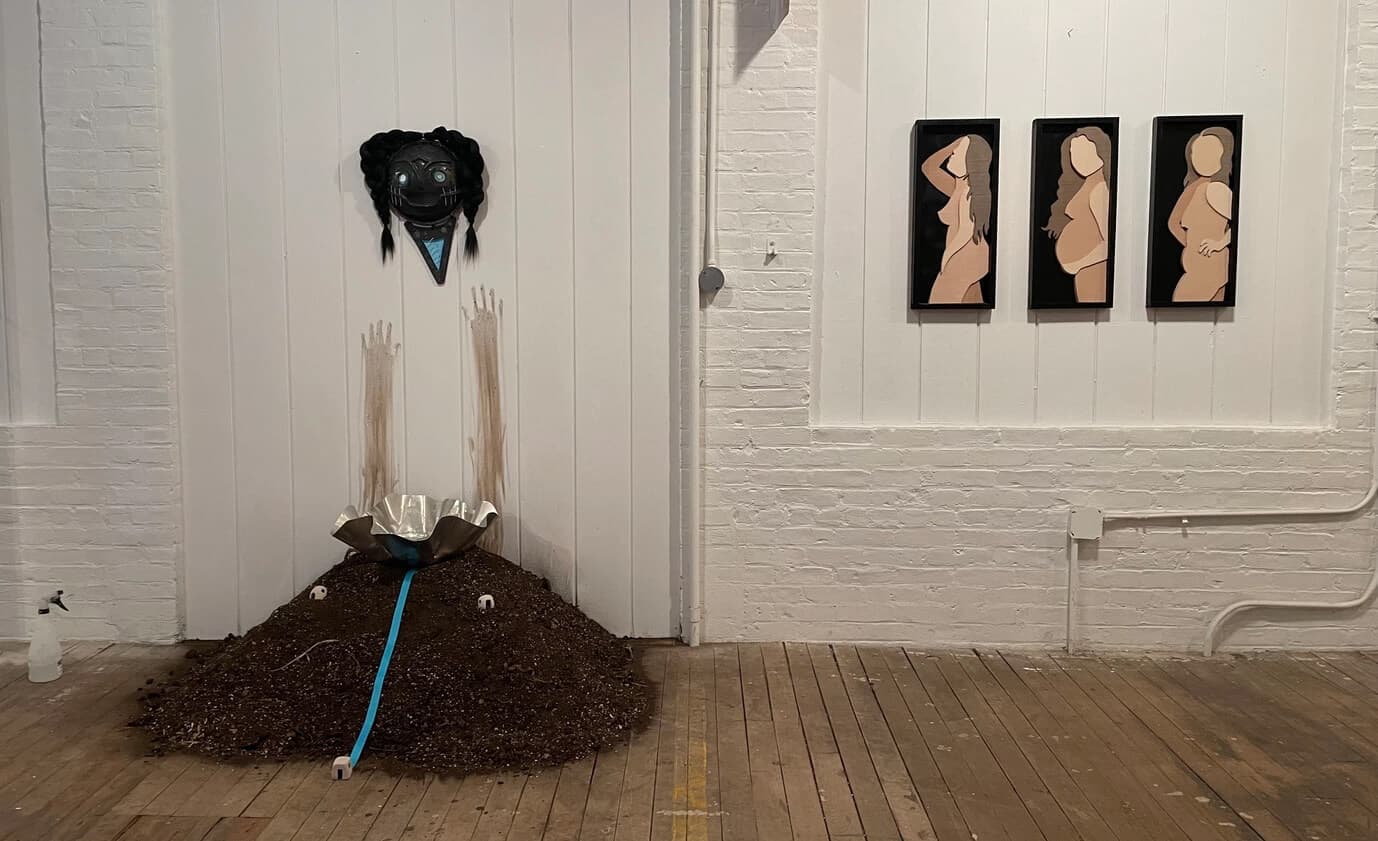
The show is generous in form and format, including video installations, prints, ceramics, sculptures, paintings, poetry, and performance. Upon entering, visitors funnel through Hillel O’Leary’s cervical pink Portal (I brought you into this world, and I can take you out of it) (2026) and circumambulate around the space; a cozy living room in the center with a stack of selected reading offers space to reflect and digest. When I spoke with Manycolors, she told me that the show begins with works that address the physical coming into being, whether at the whim of a parent or through the self-construction alluded to in Frey Wood’s Parthenogenesis (2025). In her two-channel video installation, Wood situates the car as both locus of masculine freedom in American media and vessel for so much unacknowledged childrearing labor. From this point on in the journey, “mothering” adopts many guises.
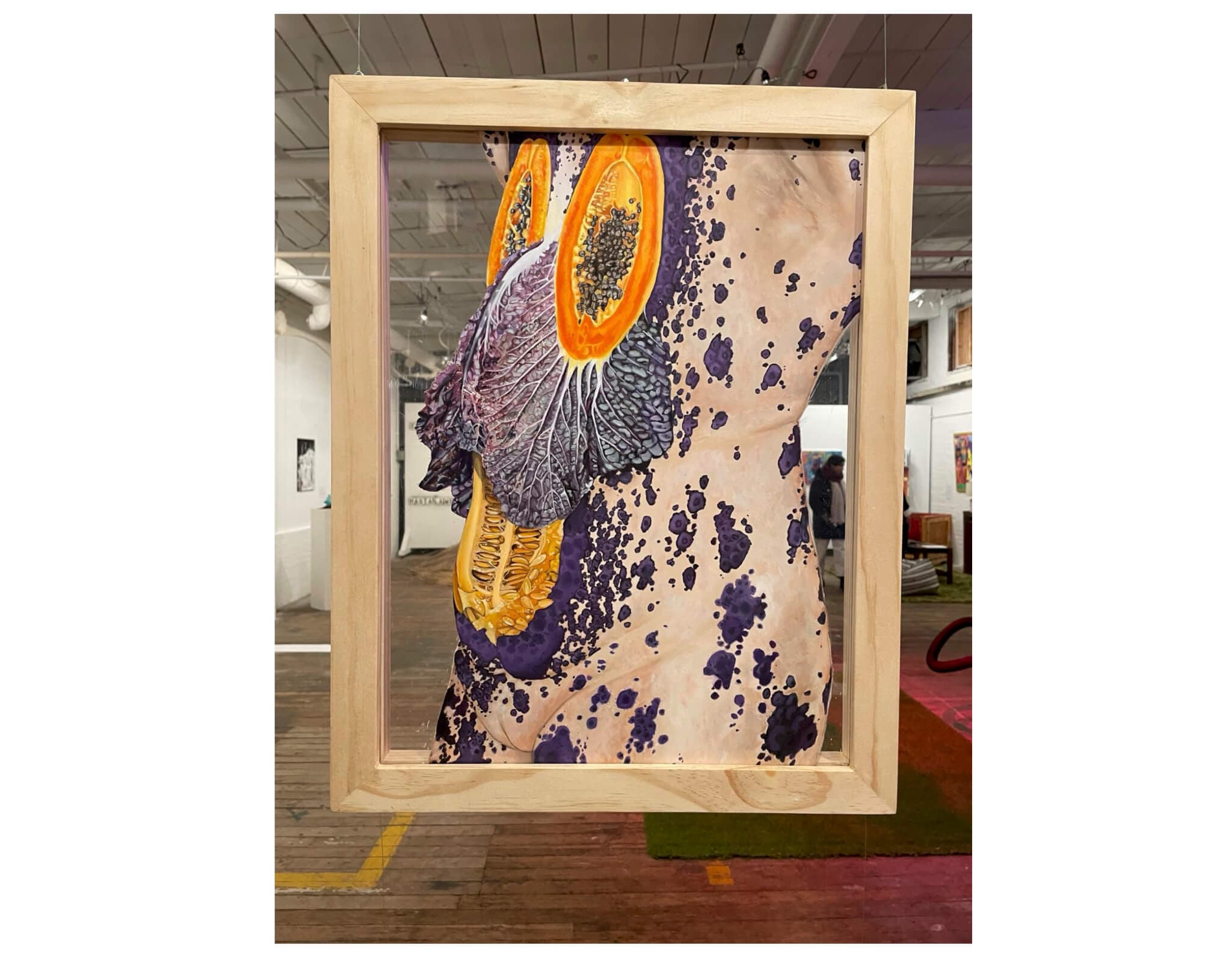
This is a dense exhibition, and with MotherFuturism offered to participating artists as a spacious framework based on care and nurturing, the works resonate in unexpected ways. Each next work asks us to reconsider which assumptions or shorthand of mothering apply in this iteration. I was ruminating on ancestral mothers who come to us in unexpected forms, as with Cai Diluvio’s grief altar to mother crocodile, Buwaya (2025), when I was reminded by Julia Ama’s Lettuce Lungs (2021) of the lush garden that is the human body, only to become engrossed by Anissa Pjetri’s zine From the Buried Mother’s lap (2025), which contextualizes the colonial history of the archeological unearthing of prehistoric mother deity figurines in the Balkans.
As philosophical-cultural frameworks, futurisms have emerged from peoples under the structures of settler-colonialism and white supremacy who have met attempts of annihilation with ever-adaptive responses for persisting in the present and imagining futures of more-than-surviving. And while the aesthetics of movements like Afrofuturism often make use of futuristic technologies and environments, Grace Dillon, who coined the term “Indigenous Futurism,” points to reckoning with both the personal and collective weight of colonialism as well as recovering ancestral practices as necessary to imagining liberatory futures.
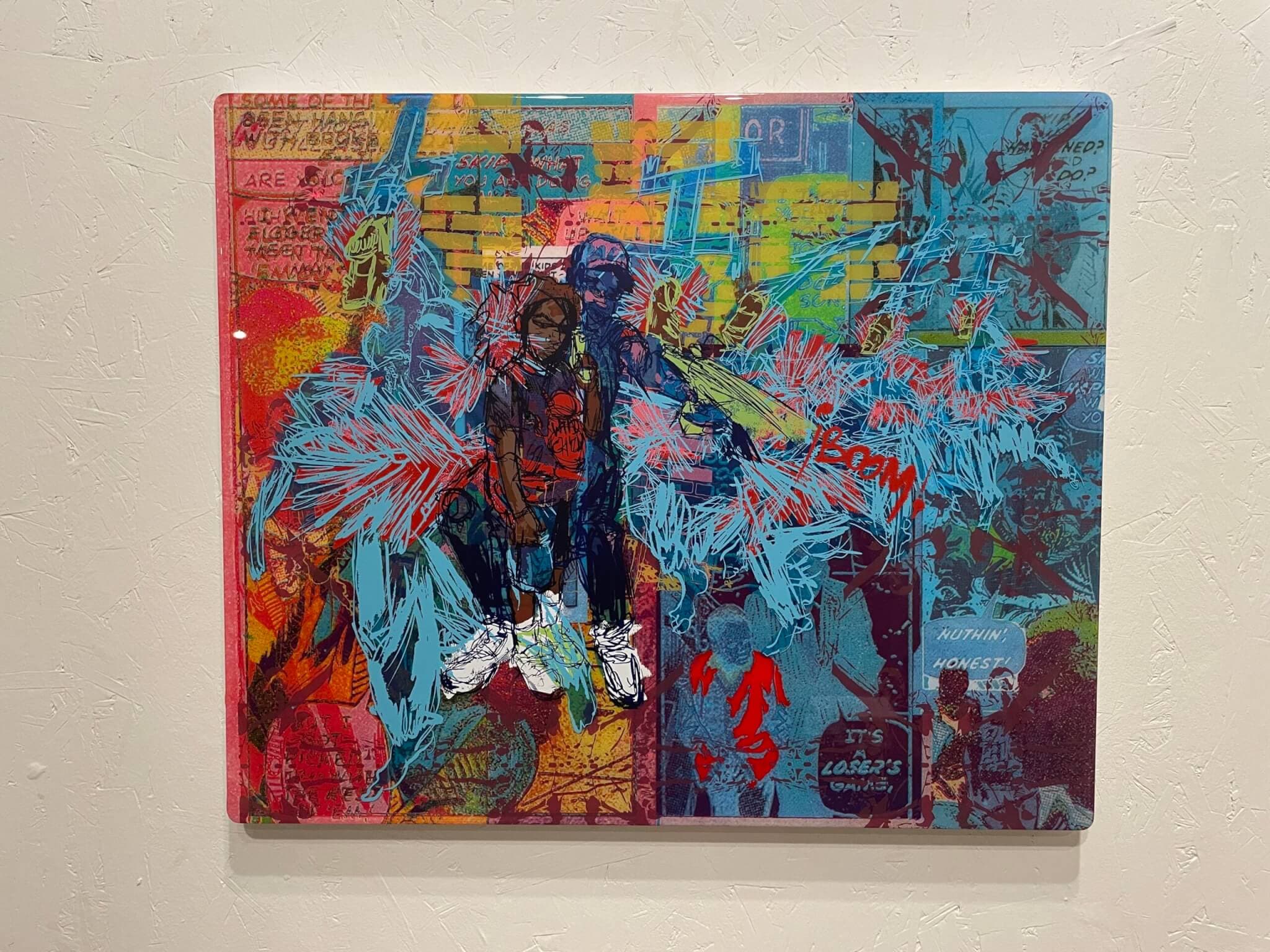
Futurism is always also about the past and the present. Becci Davis’s Asking For a Friend (2025) explores how mothering extends beyond place and time; she writes to her fourth great-grandmother as “praxis for relying on mothers of the past to nurture us through contemporary challenges.” C’Mon Skip (2025) evokes ancestral transcendence: Jazzmen Lee-Johnson channels Kanaga masqueraders from the dama funerary rituals of the Dogon peoples through layers of print and resin as agents of protection in precarious circumstances.
Manycolors’s invocation of futurism points to a linguistic and art historical irony of our shared present. Many of the Italian Futurists of the 1930s were affiliated Fascists. The movement is known for its masculinist rejection of “Mother.” Futurists turned instead to the generative power of machine guns and automobiles: technology as “Other Mother.” Nearly one hundred years later, we are in another iteration of Fascism. Hypermasculinist rhetorics of violent domination are wielded internationally and domestically. Even while conservative pundits traffic in the fantasy of the “tradwife” and (falsely) lament falling (white) birth rates, the federal administration guts services that support parents and children, and ICE rips families apart. “MotherFuturism” is a collective cry of resistance to this moment and a celebration of the ethics of mutuality, support, and care, even as it grapples with the personal and cultural fraughtness of “mothering.” Most of all, it is an urgent reminder that we need as many of us as possible to help bring our future into being.
“MotherFuturism” is on view at AUNTY’S HOUSE, 25 Acorn Street, Providence, RI, and concludes with a performance by Lilly Manycolors on February 1, 2026.